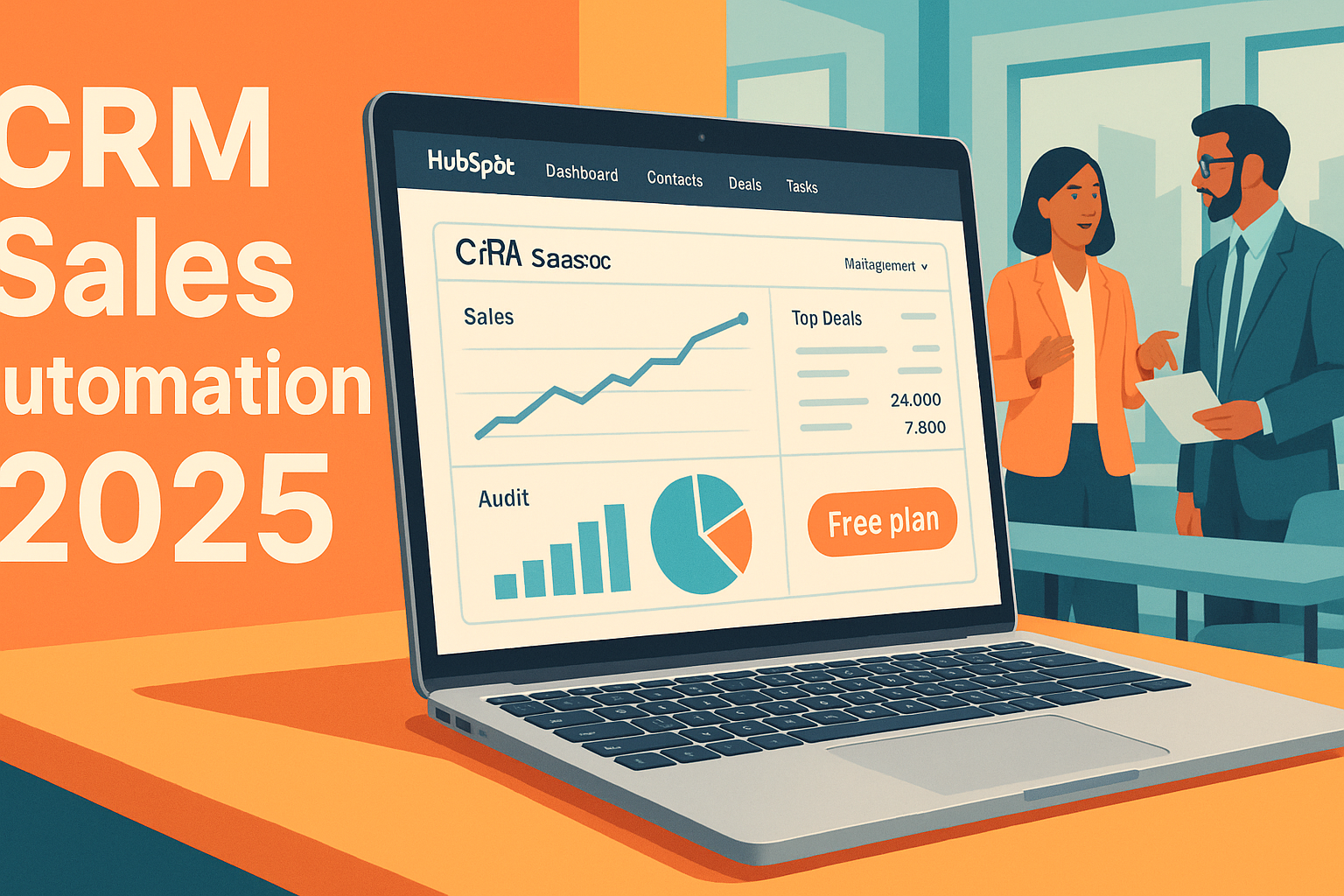
HubSpot CRM has revolutionized the customer relationship management landscape by offering a genuinely free, full-featured CRM platform that rivals many paid solutions. As one of the top CRM software 2025 options for businesses seeking an affordable CRM solution, HubSpot CRM combines powerful functionality with an intuitive interface that makes it the best CRM for small businesses just starting their growth journey. With over 1 million contacts supported on their free plan and unlimited users, HubSpot CRM proves that exceptional customer relationship management doesn’t have to come with a hefty price tag.
What sets HubSpot CRM apart in the competitive sales automation tools market is its commitment to providing substantial value without upfront costs. This approach has enabled millions of businesses worldwide to implement professional-grade CRM functionality, sophisticated sales processes, and comprehensive customer tracking without the financial barriers that often prevent small businesses from adopting enterprise-level solutions.
The platform’s freemium model isn’t just a limited trial – it’s a fully functional CRM system that many businesses use successfully for years without ever needing to upgrade. This accessibility, combined with HubSpot CRM’s reputation for ease of use and powerful integration capabilities, makes it an ideal entry point for businesses serious about optimizing their customer relationships and sales processes.
What is HubSpot CRM?
HubSpot CRM is a comprehensive, cloud-based customer relationship management platform that serves as the foundation of HubSpot’s integrated marketing, sales, and service ecosystem. Designed with user experience at its core, HubSpot CRM provides businesses with a centralized hub for managing contacts, tracking deals, automating sales processes, and analyzing customer interactions – all through an interface that prioritizes simplicity without sacrificing functionality.
Unlike traditional CRM platforms that require extensive setup and configuration, HubSpot CRM is designed for immediate deployment. New users can create an account and begin managing their customer relationships within minutes, thanks to intuitive navigation, smart defaults, and guided onboarding processes that eliminate the complexity typically associated with CRM implementation.
The platform operates on a freemium model that provides substantial functionality at no cost, including contact management for up to 1 million contacts, deal tracking, email integration, and basic reporting capabilities. This approach allows businesses to experience the full value of professional CRM functionality before deciding whether to invest in additional features through paid tiers.
HubSpot CRM’s cloud-based architecture ensures that teams can access customer data from anywhere, while automatic data synchronization keeps information current across all connected applications and devices. The platform’s mobile-first design philosophy ensures that sales professionals remain productive whether they’re in the office, traveling, or working remotely.
Key Features of HubSpot CRM
Contact Management forms the cornerstone of HubSpot CRM’s functionality, providing a comprehensive database that automatically captures and organizes customer information from multiple touchpoints. The system intelligently enriches contact profiles with publicly available information, social media profiles, and company data, creating detailed customer personas that help sales teams understand and engage prospects more effectively.
Deal Pipeline Management offers visual sales pipeline tracking that allows teams to monitor opportunities from initial contact through closed deals. The customizable pipeline stages can be tailored to match any sales process, while automated notifications ensure that no opportunity falls through the cracks. The drag-and-drop interface makes updating deal stages intuitive and efficient.
Email Integration and Tracking seamlessly connects with popular email platforms, automatically logging email conversations and providing real-time insights into recipient engagement. Sales professionals can see when emails are opened, links are clicked, and attachments are downloaded, enabling them to time follow-up communications for maximum impact.
Free Live Chat and Chatbots enable businesses to engage website visitors in real-time, capturing leads and providing immediate customer support. The chatbot functionality can qualify leads automatically, schedule meetings, and route inquiries to appropriate team members, ensuring that potential customers receive immediate attention even outside business hours.
Sales Automation capabilities eliminate repetitive tasks through customizable workflows that can automatically assign leads, send follow-up emails, create tasks, and update contact properties based on specific triggers. These automation features help sales teams focus on relationship building rather than administrative tasks.
Reporting and Analytics provide comprehensive insights into sales performance, pipeline health, and individual team member productivity. The customizable dashboards offer real-time visibility into key metrics, while detailed reports help managers identify trends, spot opportunities for improvement, and make data-driven decisions about sales strategies.
Mobile CRM Application ensures that sales teams remain productive regardless of location, providing full access to contact information, deal updates, and communication tools through a streamlined mobile interface designed for on-the-go productivity.
Use Cases of HubSpot CRM in Real Businesses
Startup and Small Business Implementation represents one of HubSpot CRM’s most common and successful use cases. Growing businesses leverage the free plan to establish professional sales processes, track customer interactions, and build comprehensive customer databases without initial software costs. These implementations typically focus on lead capture through website forms, automated lead assignment to sales representatives, and basic pipeline management that scales as the business grows.
Marketing Agency Success Stories demonstrate HubSpot CRM’s effectiveness in service-based businesses. Agency Huify achieved remarkable results using HubSpot CRM, growing their revenue 6x in 12 months while reducing their sales cycle by 9x and expanding their team by 5x. This success stemmed from HubSpot CRM’s ability to integrate marketing and sales activities, providing comprehensive client relationship management that supported rapid business growth.
E-commerce and Retail Businesses utilize HubSpot CRM to create personalized customer experiences by tracking purchase history, preferences, and engagement patterns. These businesses often integrate HubSpot CRM with their e-commerce platforms to create automated workflows that nurture customers through their buying journey, from initial interest through repeat purchases and referral generation.
Professional Services Firms leverage HubSpot CRM’s project management capabilities and client communication tools to manage complex client relationships from initial consultation through project completion and ongoing relationship maintenance. The platform’s ability to track multiple touchpoints and stakeholders within client organizations makes it particularly valuable for B2B service providers.
SaaS and Technology Companies use HubSpot CRM to manage complex sales cycles involving multiple stakeholders, free trials, and sophisticated product demonstrations. The platform’s integration capabilities allow these businesses to track user behavior, engagement metrics, and conversion events, creating comprehensive customer journeys that inform sales strategies and product development decisions.
Pros and Cons of HubSpot CRM
Advantages of HubSpot CRM begin with its exceptional free plan that provides genuine value without hidden costs or artificial limitations. The free tier includes contact management for up to 1 million contacts, unlimited users, deal tracking, email integration, and basic reporting – functionality that many competitors charge hundreds of dollars monthly to provide.
User-friendly interface represents another significant advantage, with HubSpot CRM consistently rated as one of the most intuitive CRM platforms available. New users can become productive within hours rather than weeks, and the platform’s logical organization reduces training requirements and accelerates adoption across sales teams.
Comprehensive integration ecosystem enables HubSpot CRM to connect with hundreds of popular business applications, creating unified workflows that eliminate data silos and enhance productivity. These integrations span email platforms, marketing tools, accounting software, and industry-specific applications, ensuring that HubSpot CRM can adapt to existing technology stacks.
Scalable growth path allows businesses to start with the free plan and gradually add functionality as their needs evolve. This scalability ensures that businesses never outgrow their CRM investment, while the modular approach prevents paying for unused features during early growth stages.
All-in-one platform potential enables businesses to consolidate marketing, sales, and service functions within a single integrated system, reducing complexity and improving data consistency across all customer touchpoints.
Disadvantages of HubSpot CRM include expensive paid tiers that can quickly become cost-prohibitive as businesses scale. While the free plan provides excellent value, advanced features like sales automation, custom reporting, and advanced integrations require paid subscriptions that can reach thousands of dollars monthly for growing businesses.
Limited customization options may frustrate businesses with complex or unique sales processes. While HubSpot CRM offers good flexibility, it doesn’t match the extensive customization capabilities provided by platforms like Salesforce, potentially limiting its effectiveness for businesses with sophisticated requirements.
Feature limitations on free plan become apparent as businesses grow and require more advanced functionality. Critical features like sales automation, custom properties, and advanced reporting are restricted to paid tiers, creating pressure to upgrade as business needs evolve.
Pricing complexity across HubSpot’s various “hubs” can create confusion and unexpected costs. Businesses often discover that achieving their desired functionality requires multiple paid subscriptions, significantly increasing total cost of ownership beyond initial expectations.
Final Verdict: Is HubSpot CRM Worth It in 2025?
HubSpot CRM represents an exceptional value proposition for businesses seeking a professional-grade CRM solution without upfront costs. The platform excels as the best CRM for small businesses and startups that need immediate functionality with the flexibility to scale as they grow. Its combination of powerful features, intuitive design, and generous free plan makes it an ideal choice for businesses taking their first steps into structured customer relationship management.
For growing businesses with straightforward sales processes, HubSpot CRM provides everything needed to manage customer relationships effectively while maintaining the simplicity that keeps teams productive. The platform’s strength lies in its ability to deliver immediate value without requiring extensive setup, training, or upfront investment.
However, enterprises with complex sales processes or those requiring extensive customization may find HubSpot CRM’s limitations frustrating. While the platform offers good functionality, it doesn’t match the depth and flexibility provided by more sophisticated solutions like Salesforce or Microsoft Dynamics 365.
The platform’s paid tiers become expensive quickly, which may challenge businesses as they scale. Organizations should carefully evaluate their long-term needs and budget constraints before committing to HubSpot CRM’s upgrade path, as costs can escalate significantly when advanced features become necessary.
In 2025, HubSpot CRM continues to justify its position as the leading freemium CRM platform through continuous innovation, particularly in AI-powered features and automation capabilities. For businesses prioritizing ease of use, quick implementation, and minimal upfront costs, HubSpot CRM remains the most accessible entry point into professional customer relationship management.
The platform’s greatest strength lies in removing barriers to CRM adoption, enabling businesses to begin building systematic customer relationships immediately. This accessibility, combined with a clear growth path and comprehensive feature set, makes HubSpot CRM an excellent choice for ambitious businesses ready to transform their customer relationship management without significant initial investment.